

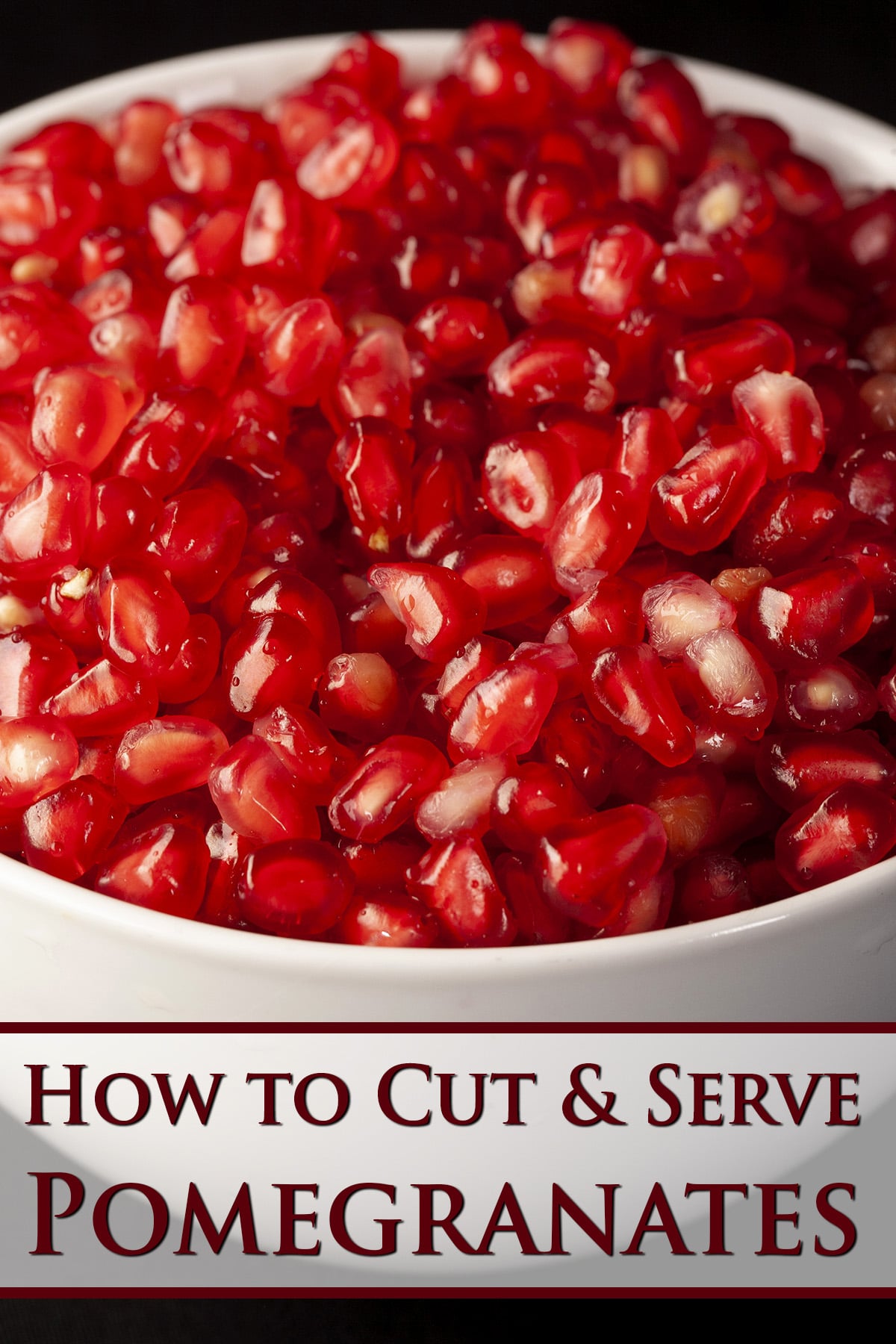
Pomegranate is a tasty, fun, and healthy fruit, but cutting them open can intimidate some. Here's how to cut a pomegranate ... and what you can do with it!
Originally published Oct 20, 2021, updated 9/20/22.
Late October / early November marks the start of pomegranate season, which goes from late fall right through the bulk of the winter months.
The season timing is perfect, as the beautiful color of the loose seeds makes a perfect topping, garnish, or inclusion in many holiday dishes.
Just a really beautiful fruit, with a nice tart flavor.
I didn’t have a plan for using it, but bought one anyway. Figured I’d re-tool one of the Christmas side dishes I was planning, to include fresh pomegranate seeds.
Barring that - we’d just eat the pomegranate fruit straight, as a juicy snack..
However, we’ve long given up on buying the little cups of arils. Not only are they overpriced, but half the time they’ve already started fermenting.
Fine, if you’re making wine... but pretty gross, if you’re looking for a salad topper or snack!
Anyway, as a result of one too many purchases of unintentionally boozy pomegranate arils, we started buying whole pomegranate a few years ago.
I know that separating the white membrane from the loose seeds may be intimidating to some, but really? We would never go back to buying the little cups of arils again.
It took some experimentation, but we eventually figured out the best way to de-seed pomegranates - without a making a big mess.
Now, I’m sharing our foolproof method!
Give it a try, and soon you may find yourself going through large amounts of the tart fruit when the season hits!
Pomegranate FAQ
What are Pomegranate Arils?
SO, there are a few different parts of a pomegranate that you’ll be dealing with, and that I’ll be referring to.
Skin/rind - the outer red part.
Membrane - The papery, white pith that separates sections of the fruit.
Seeds - Pretty self-explanatory!
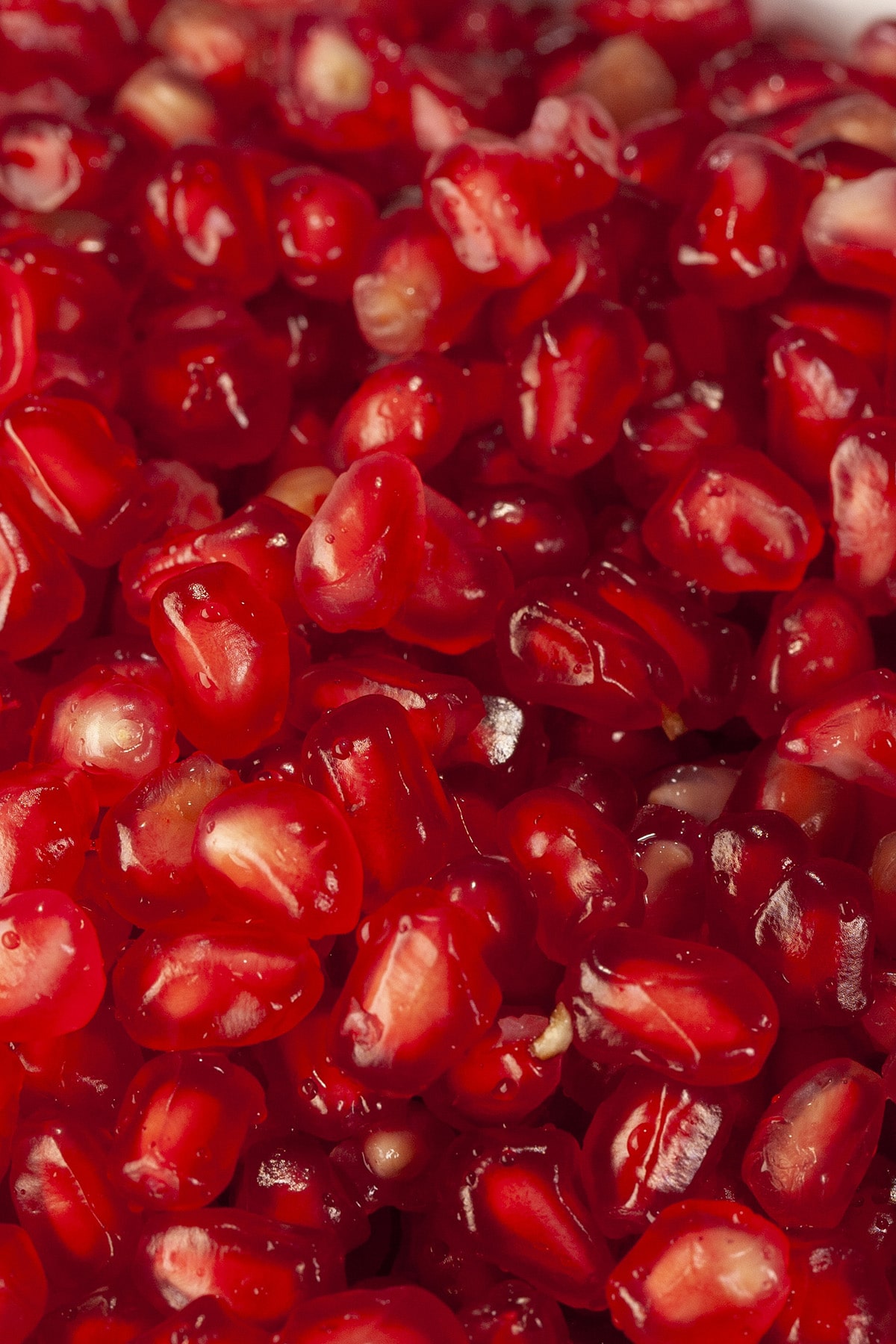
... and then there’s the tart arils.
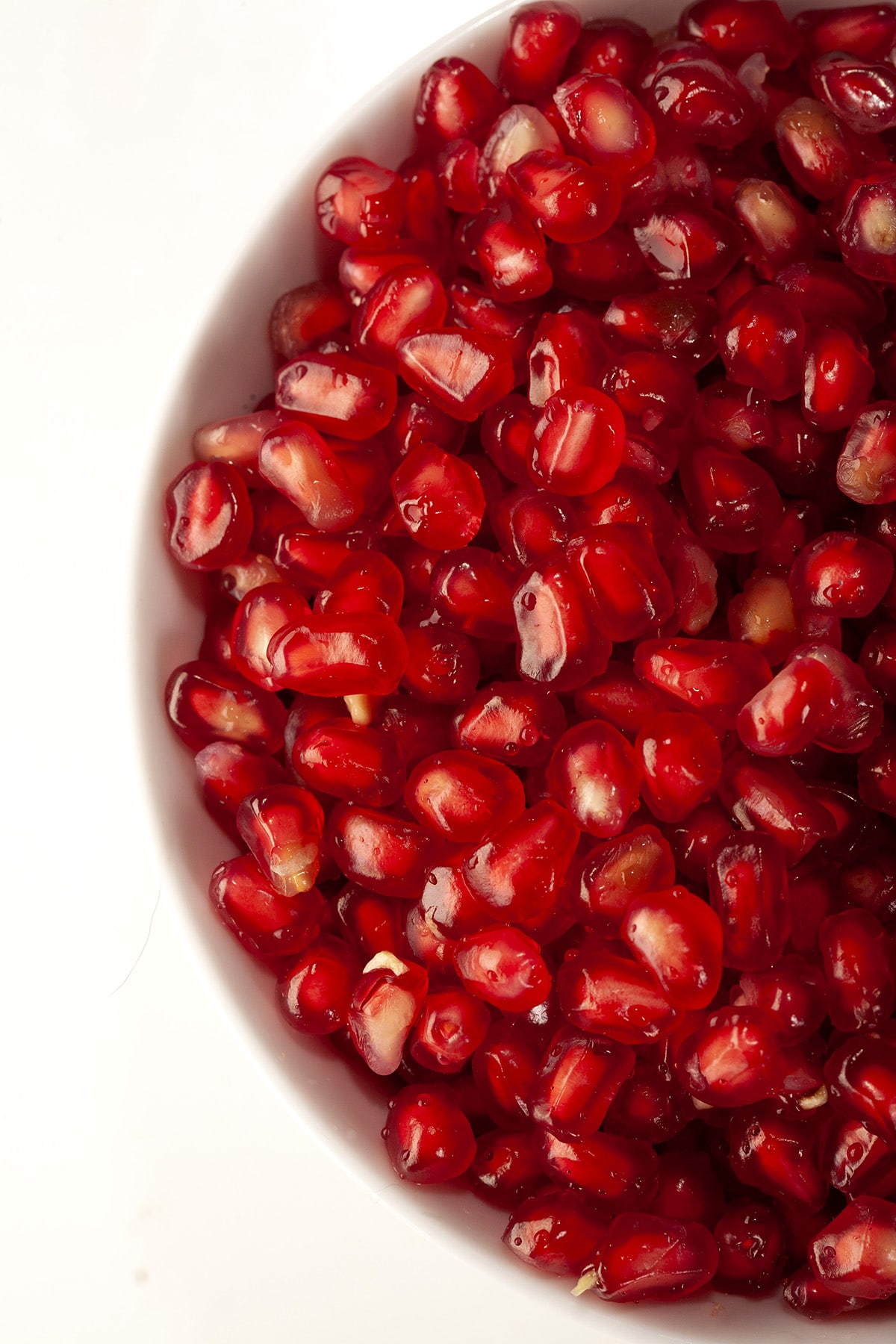
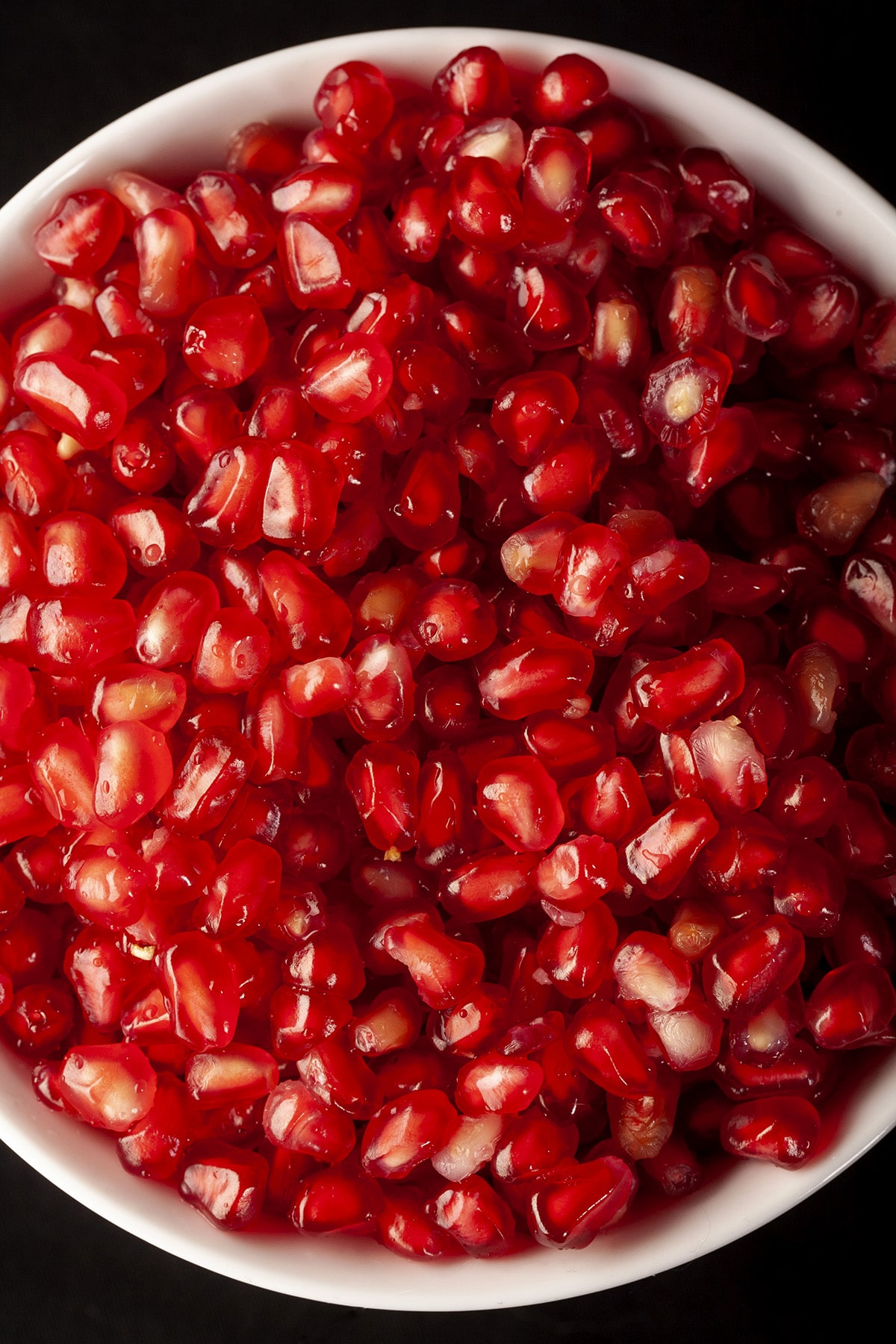
The aril is what a lot of people refer to as the seed. It’s the seed PLUS the red fruit that surrounds each seed.
Do you eat the seeds in a pomegranate?
Yes! Like many other berries - yes, pomegranates are botanically categorized as berries - you eat the ruby red seeds along with the fruit.
Strawberries, raspberries, blueberries, etc - the seed is essentially part of the fruit.
Pomegranates are considered a super fruit, and are touted for all kinds of health benefits.
Those beautiful seeds and bright red juice are known to be antioxidant, considered to be anti-iniflammatory, and are high in vitamin C, vitamin K, potassium, and other nutrients.
What does Pomegranate Taste Like?
Ripe pomegranates have a deep, rich, somewhat acidic berry taste.
If you took some sweetened cranberry juice, added a bit of grape juice, and maybe a bit of raspberry?
That’s an approximation of what pomegranate arils taste like... IMHO.
When is Pomegranate in Season?
I tend to start seeing pomegranates on sale in the grocery store around September, and they usually stick around til January or February.
How to Buy a Good Pomegranate
Look for large pomegranates that feel heavy for their size - this is a good indicator that they’re full of juice.
The outer skin should be an evenly smooth skin that is firm and unbroken, with gentle ridges but no bruising, cracks, or soft spots.
The thick skin should be some form of red or pinks - I tend to stay away from any that have browning on the skin.
How to Store Pomegranate
Once you get your pomegranate home, you can store it at room temperature for a few days, or in the fridge for a week or two.
After you’ve freed the juicy seeds, I recommend keeping them in an airtight container in the fridge and eating them within a day or two.
Otherwise, they may start fermenting - the thing we were trying to avoid in the first place!
How to Freeze Pomegranate
If you won’t be able to eat the juicy arils within a few days, you can spread them out on a parchment lined baking sheet - and pat them dry with some paper towel - then freeze them for a few hours.
Once frozen, pour the arils into a freezer bag, remove as much air as possible, and freeze for up to 6 months.
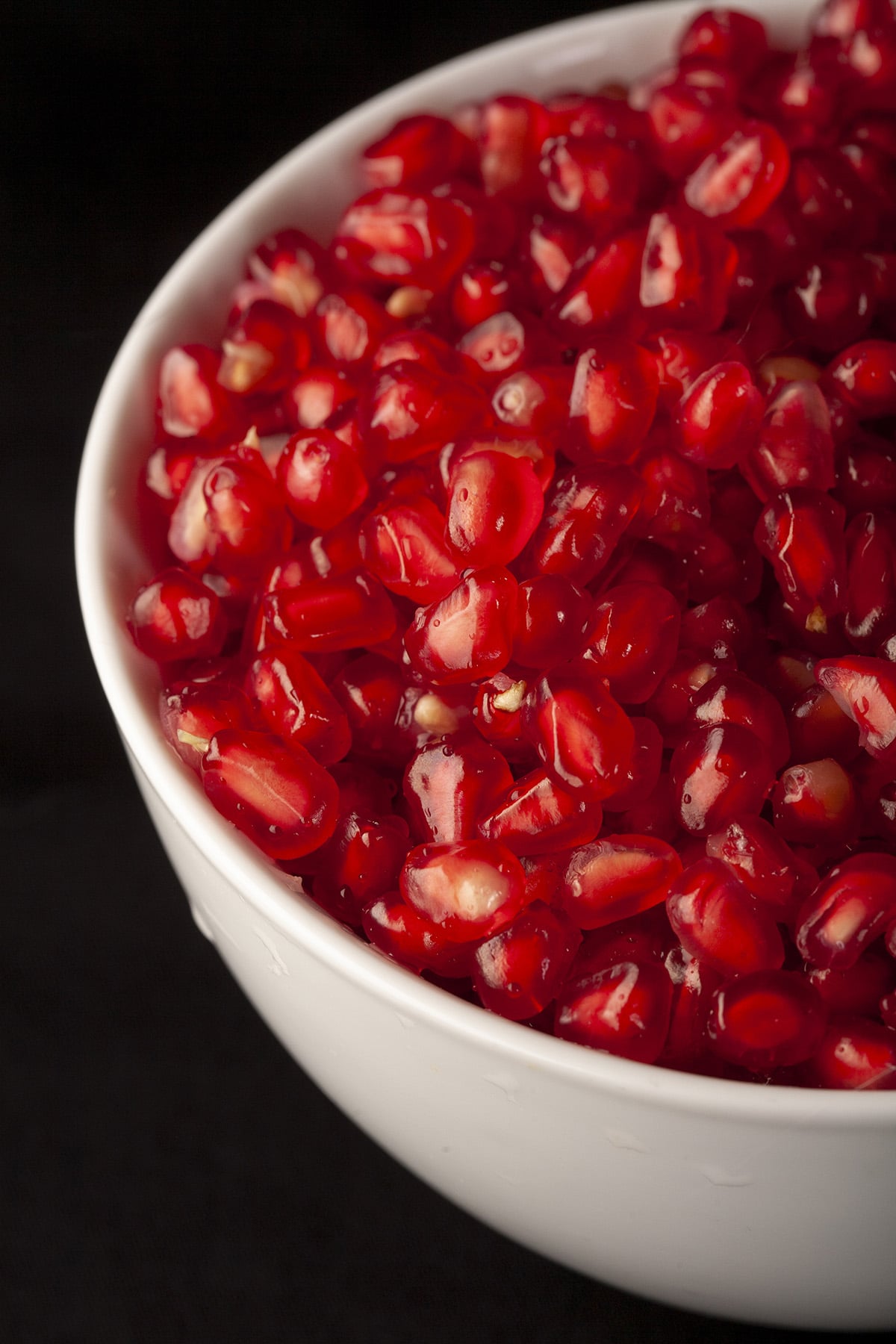
How to Serve Pomegranate
Personally, we tend to eat pomegranate arils by the handful, like a couple of heathens. LOL.
If not by the handful, we’ll toss them in bowl of chopped fruit - usually melons, sometimes as a fruit salad.
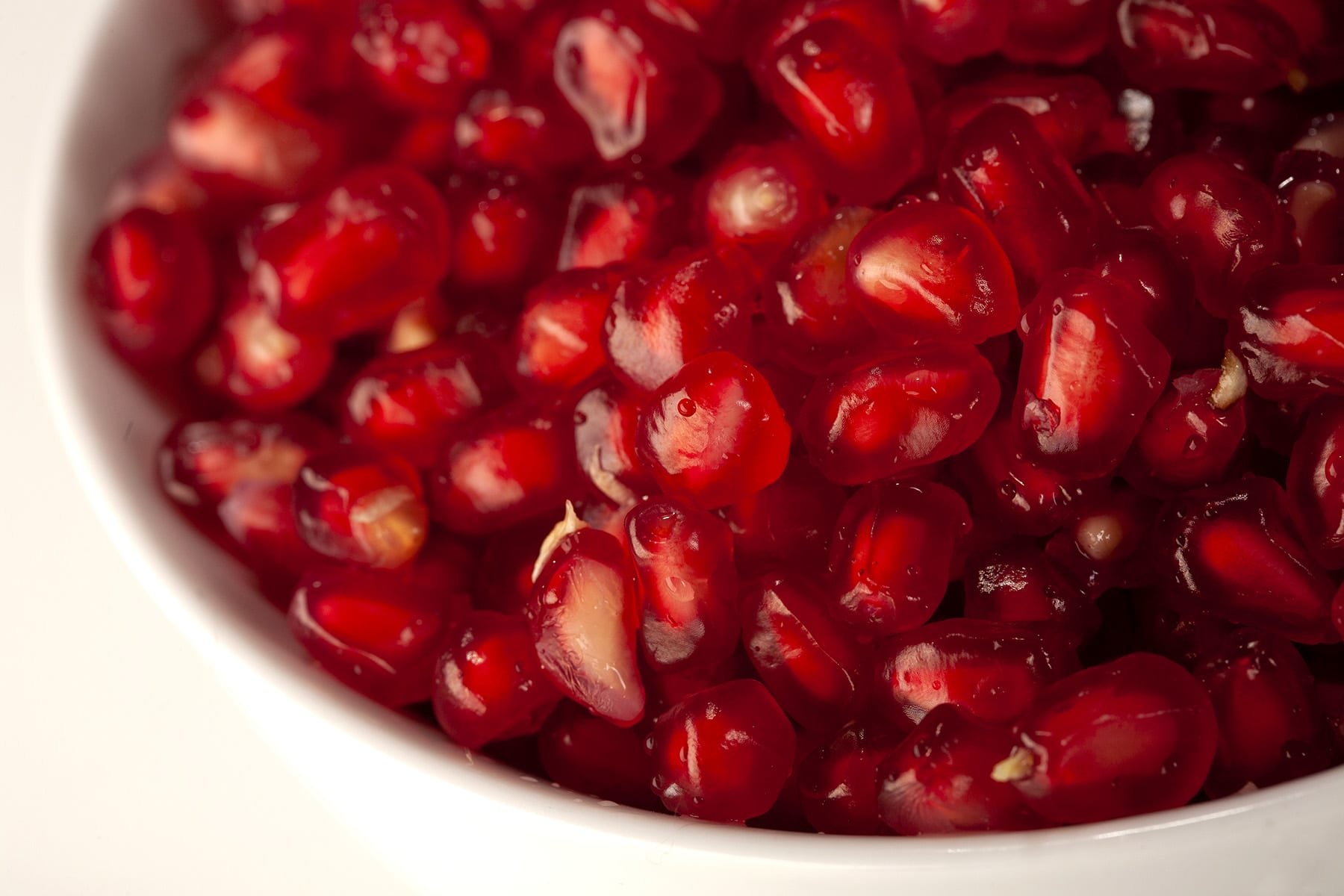
For reference, we usually get 1 ¾ - 2 cups of arils per pomegranate.
They’re also good:
- With cheeses and meats, on a charcuterie board.
- Over Oatmeal
- Over Hummus or Baba Ghanoush*
- As a topping or garnish for Pavlovas... or ice cream.
- For decorating holiday turkey platters
- To brighten up rice dishes
* There’s a local restaurant - Cheezaatar - that serves moutabal, a roasted eggplant dip that’s sort of like a warm baba ghanoush, with tahini in it and pomegranates on top. Unf. Seriously one of the best things we’ve ever eaten!
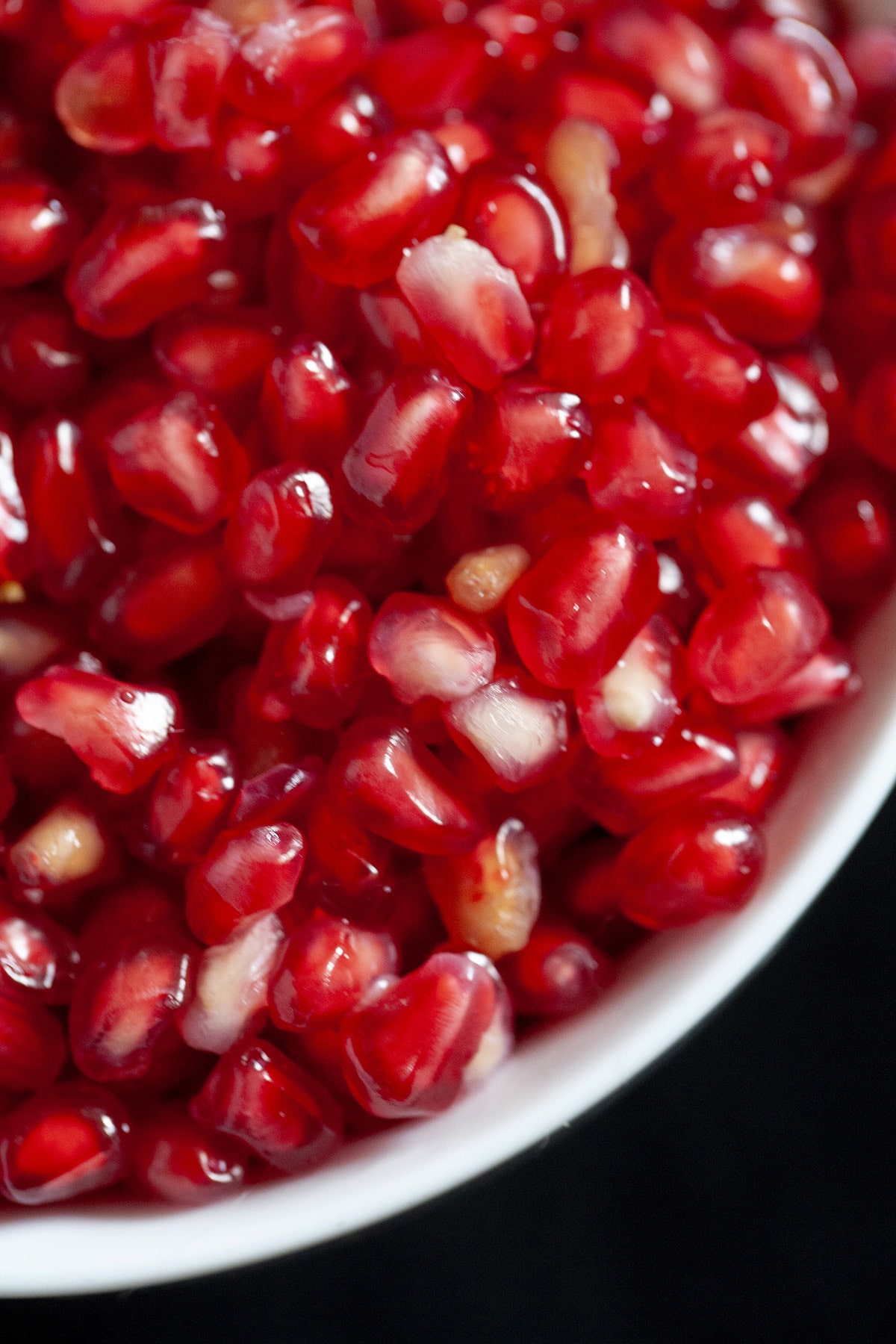
Equipment
There are only a few basic items you’ll need to cut and serve a pomegranate:
Sharp knife
Plastic Cutting Board
Large Bowl of water
You want a sharp knife - this is important. Not only will it make cutting the pomegranate easier, it’s a lot safer than using a dull one for this!
We’ll generally use a chef’s knife, but a sharp paring knife also works.
You’ll want to use a plastic cutting board, as the fresh pomegranate juice stains wooden ones.
For that matter, pomegranate juice stains a lot more than cutting boards, so maybe don’t wear your favourite white shirt when working with them!
Also a good idea: If you have a cutting board with grooves, it can help keep the juice off your kitchen counter.
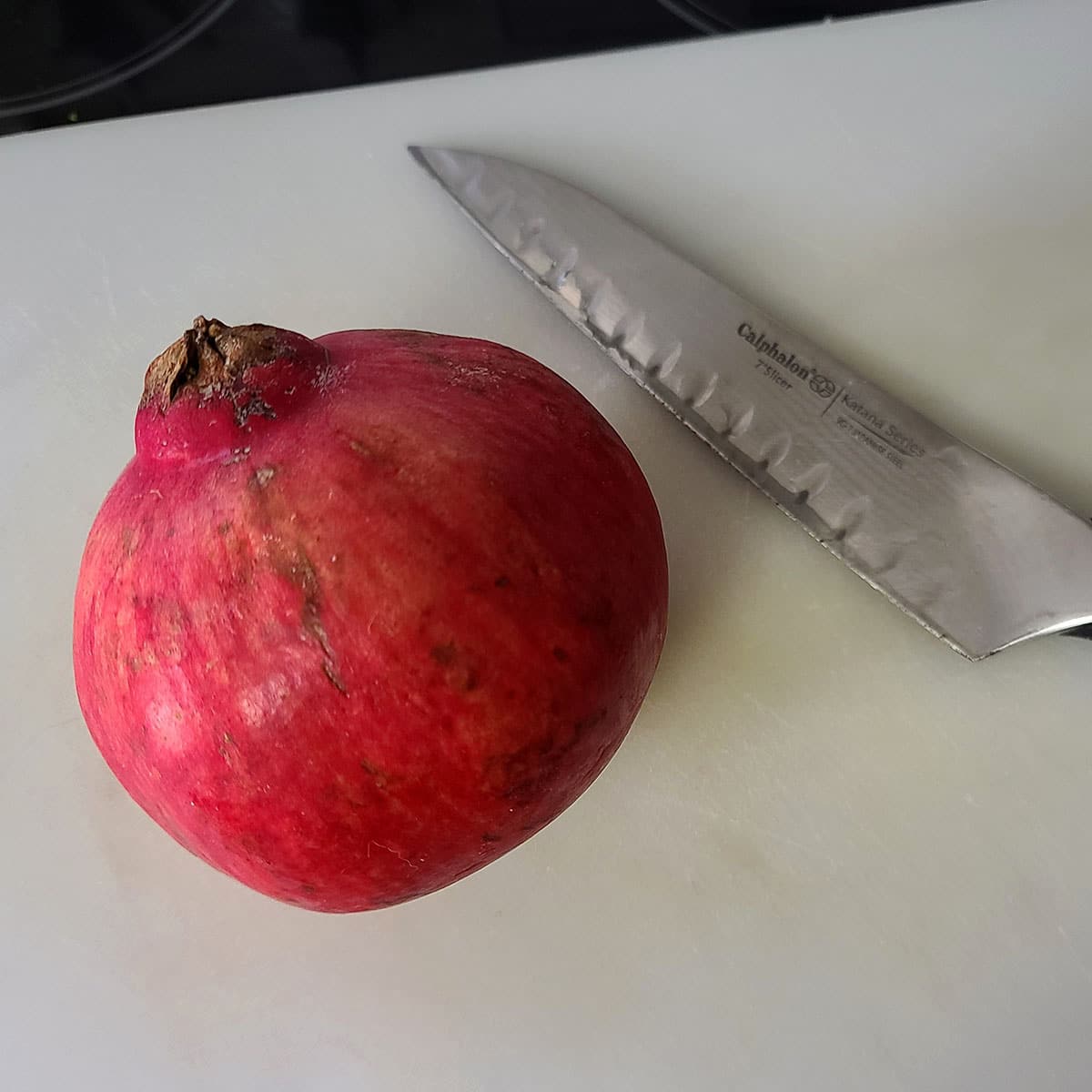
How to Cut a Pomegranate
This is a pictorial step-by-step guide. If you’d like the quick instructions in a printable format, see the recipe card at the end of this post.
Wash the outside skin of the pomegranate.
You’ll be handling the outer skin at the same time as the inside, so you will transfer anything on the outside, to the raw fruit you’ll be eating.
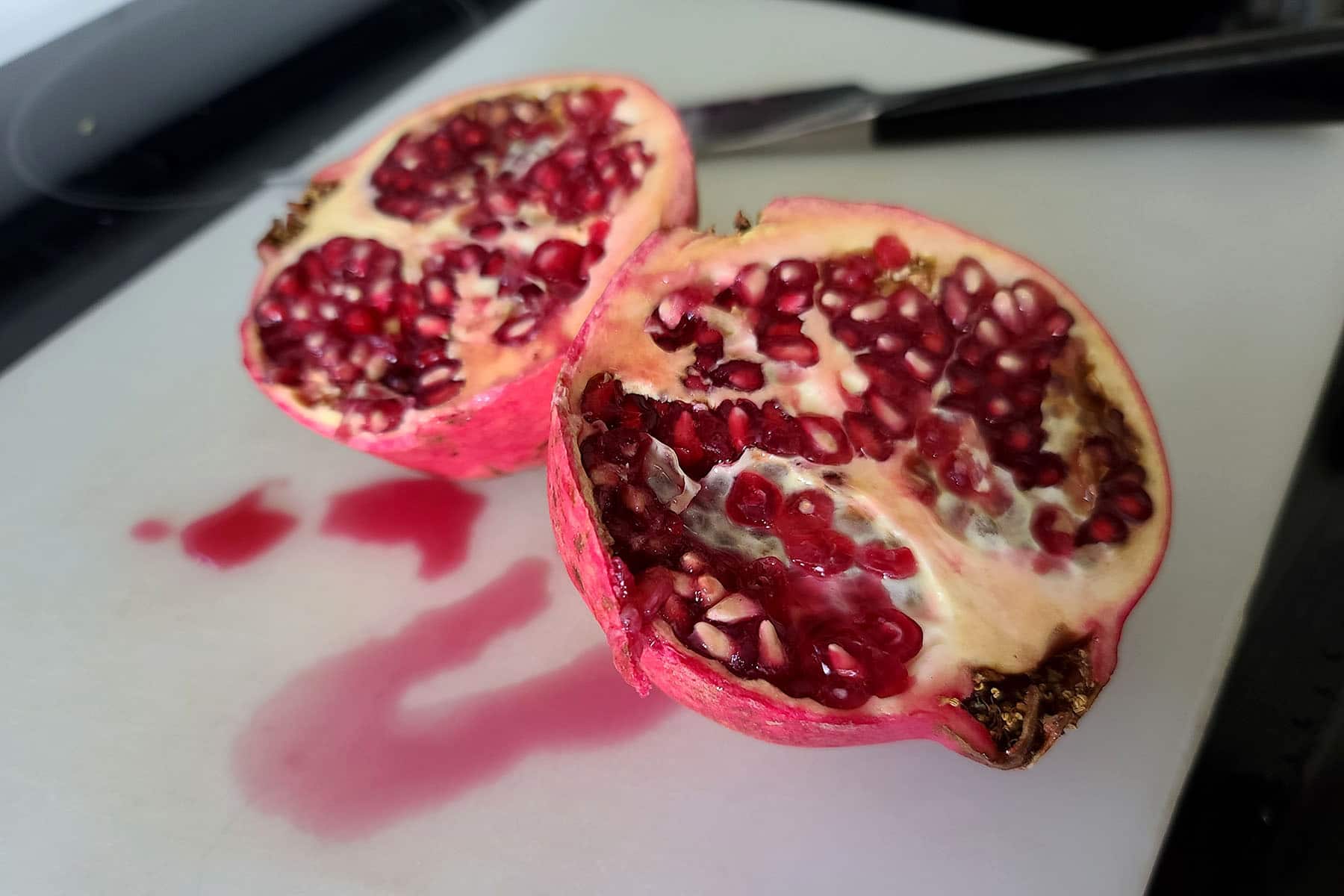
Use a sharp knife to cut the pomegranate in half.
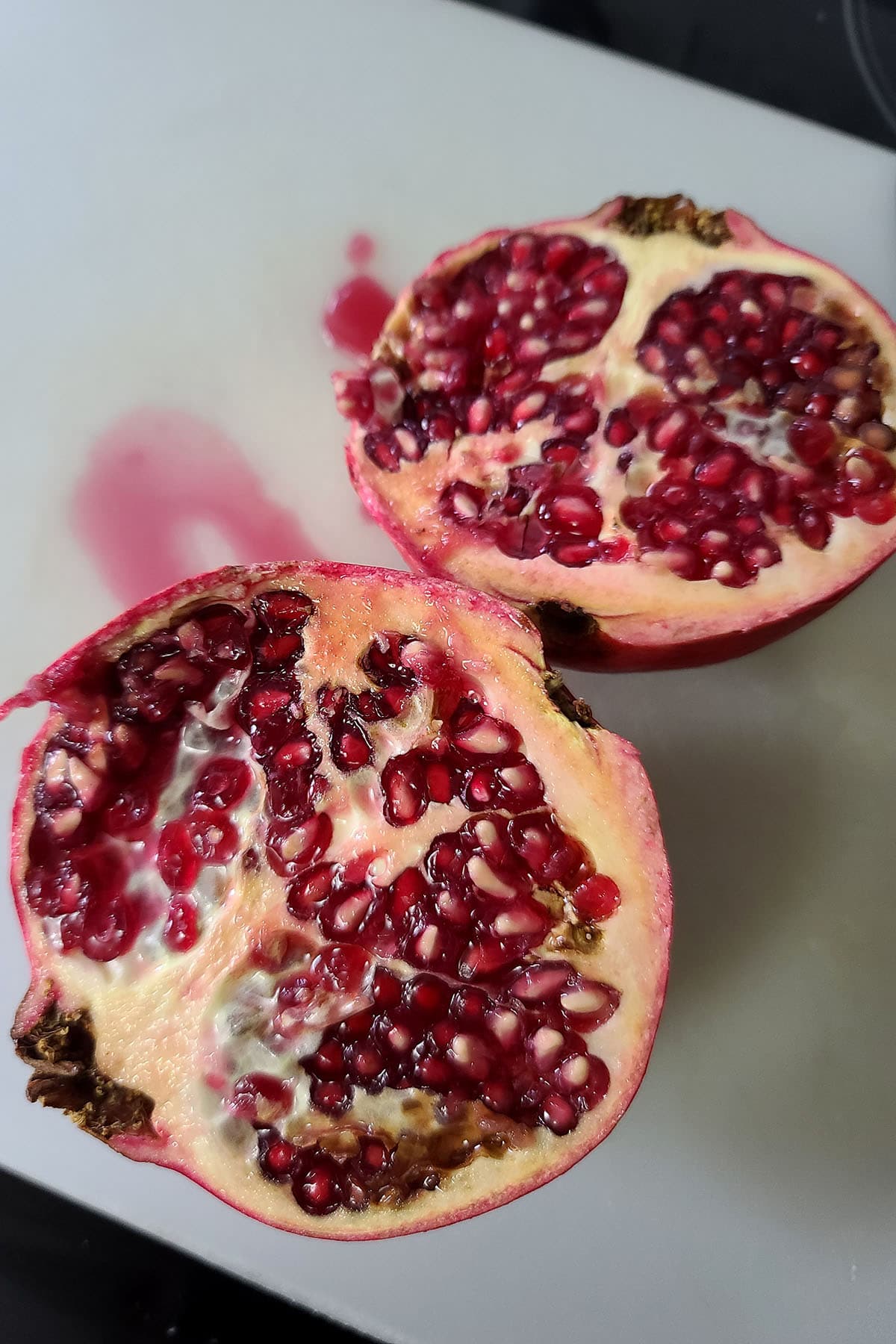
(Pomegranates are made up of several “chambers” separated by a yellowy white pith-type membrane... sort of like segments of an orange)
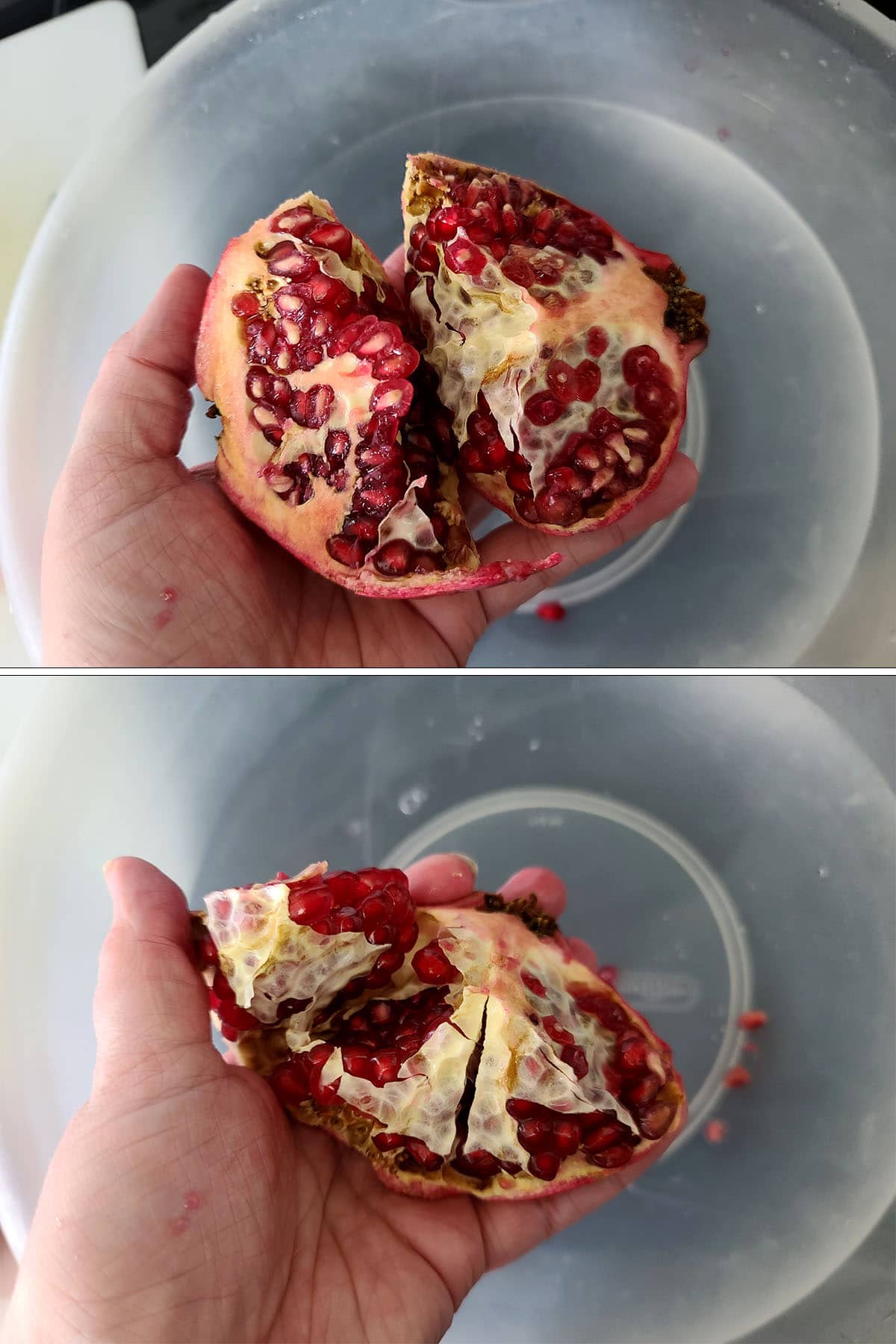
Working with one of the sections of the pomegranate at a time, gently remove the pomegranate arils, allowing them to collect in the bottom of the bowl of water.
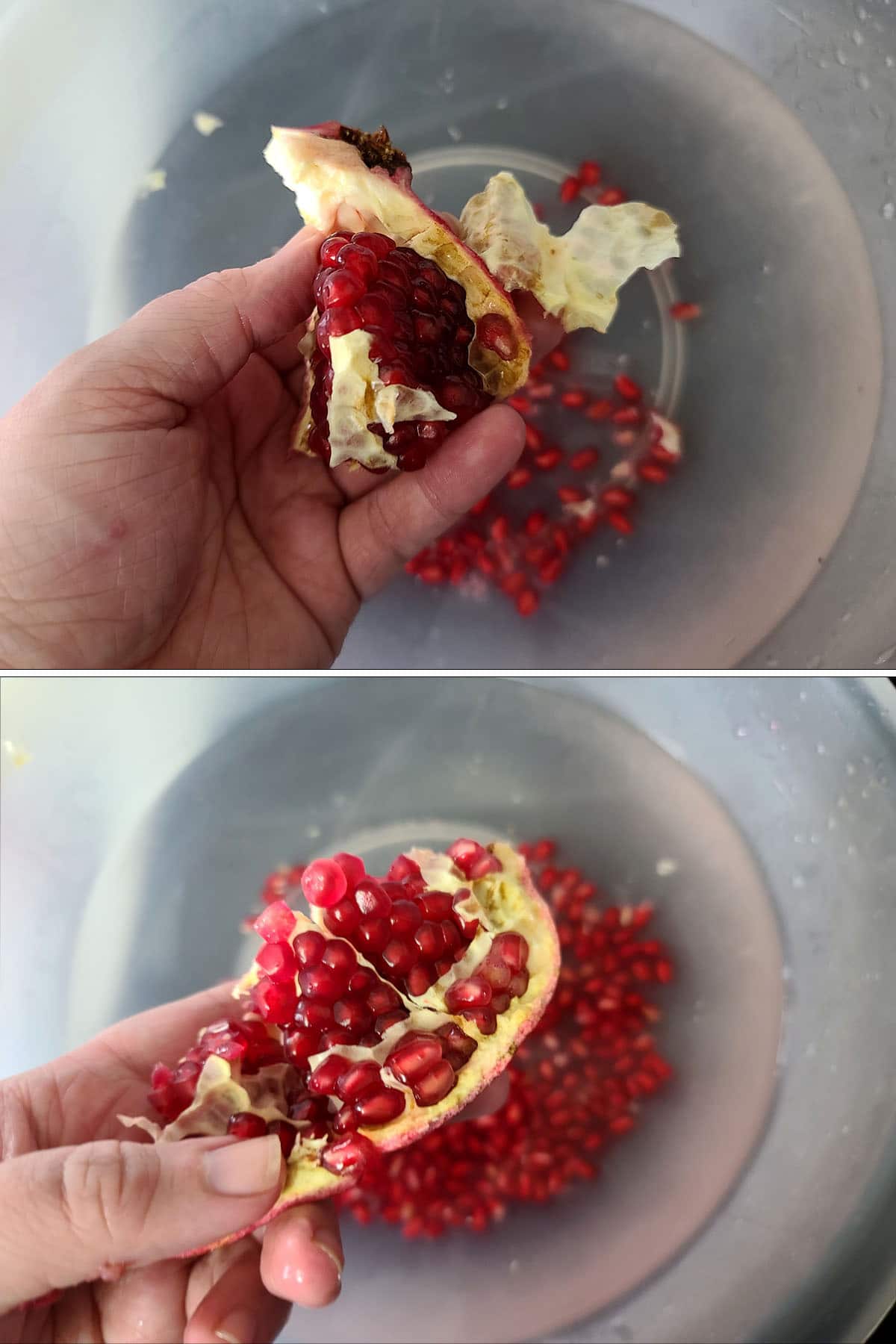
I tend to lightly dislodge them with the thumb of the hand that’s holding the chunk of pomegranate.
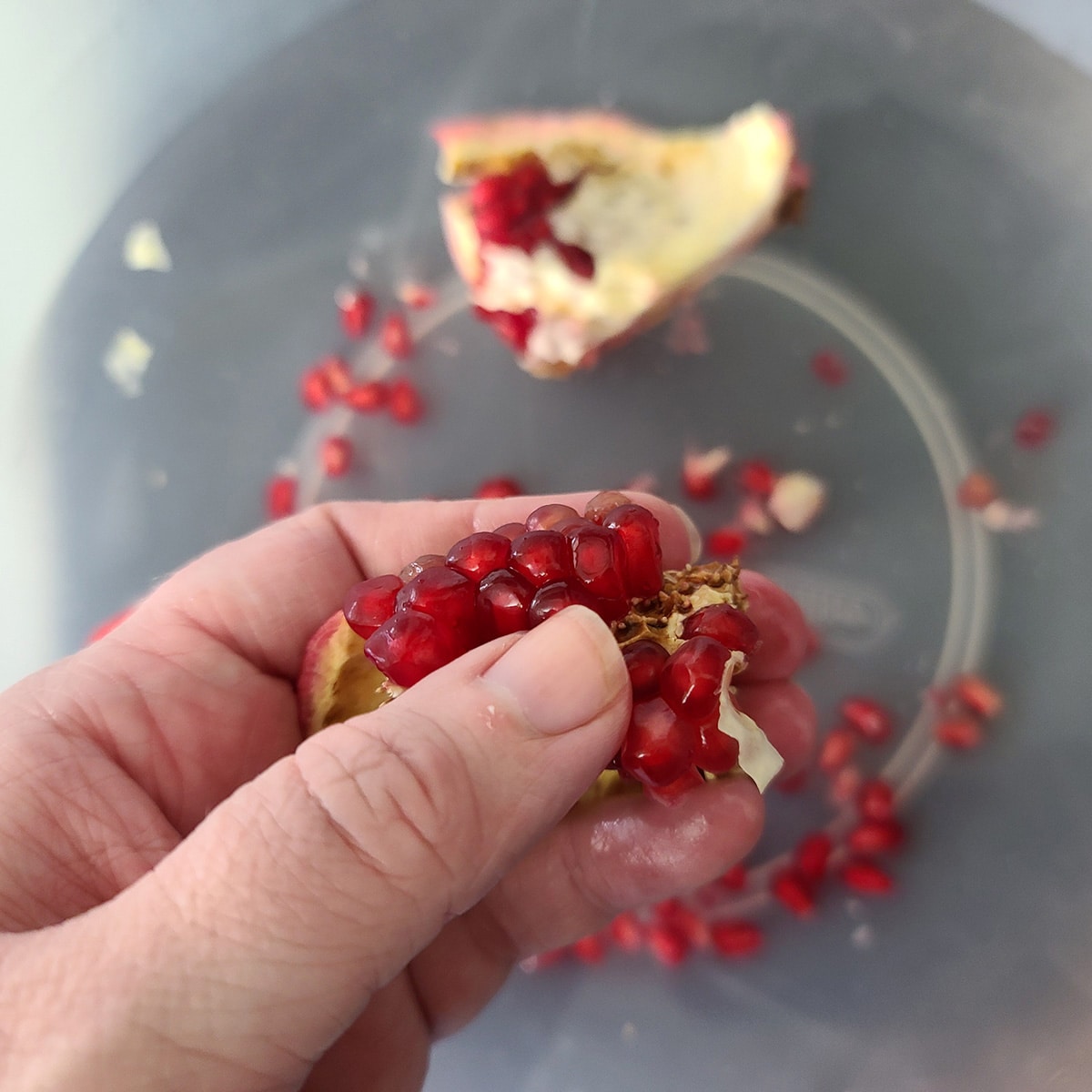
Once you have all the seeds separated from one section, move on to another - breaking it up, removing membrane, and dislodging the arils into the bowl of water.
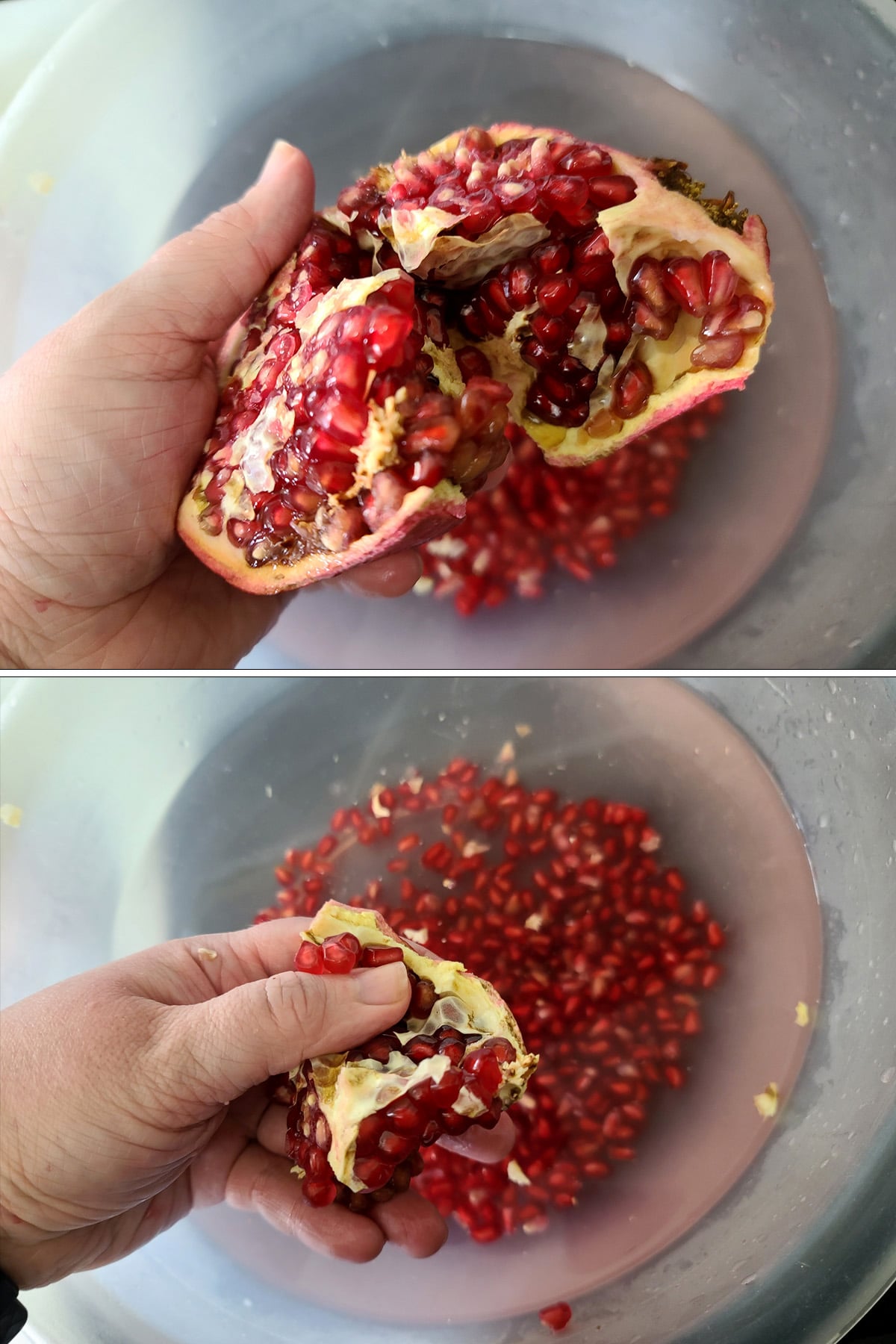
Once you’re done, discard the shell and loose membrane bits.
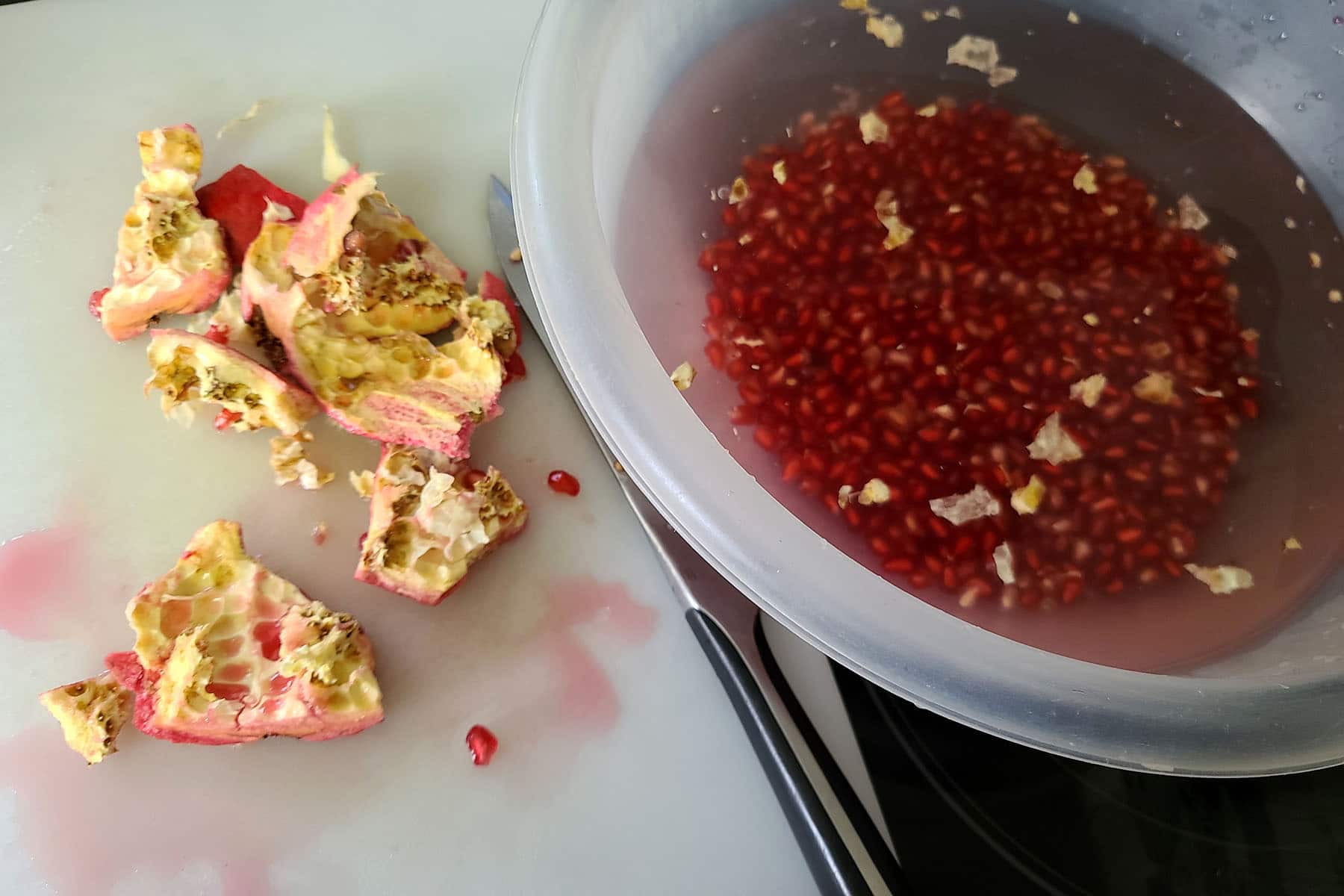
Turning your attention to the bowl of water and arils, sort through the fruit to pick out any attached membrane.
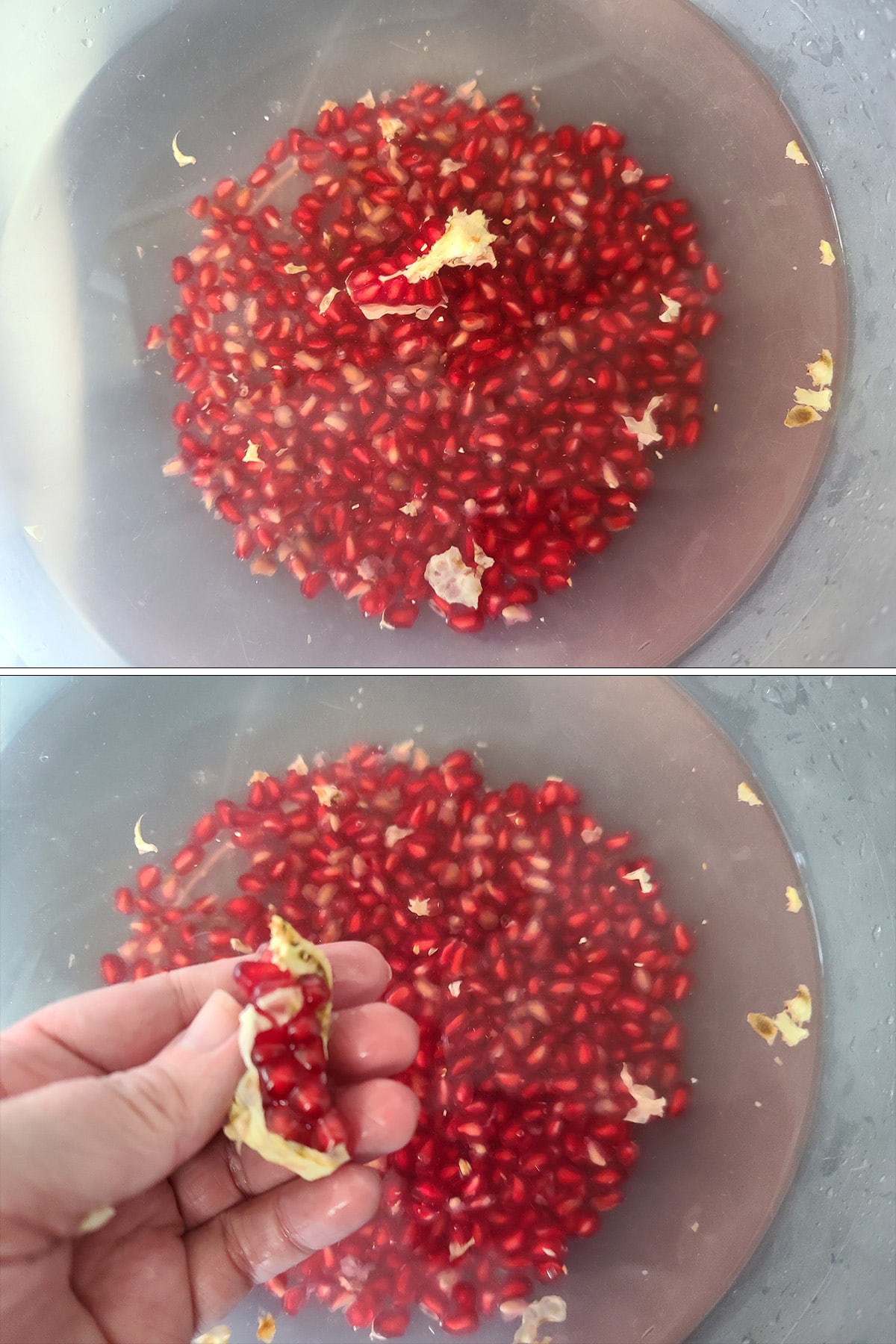
The membrane will float to the top of the water - unless it’s attached to fruit - so it’s easy to spot!
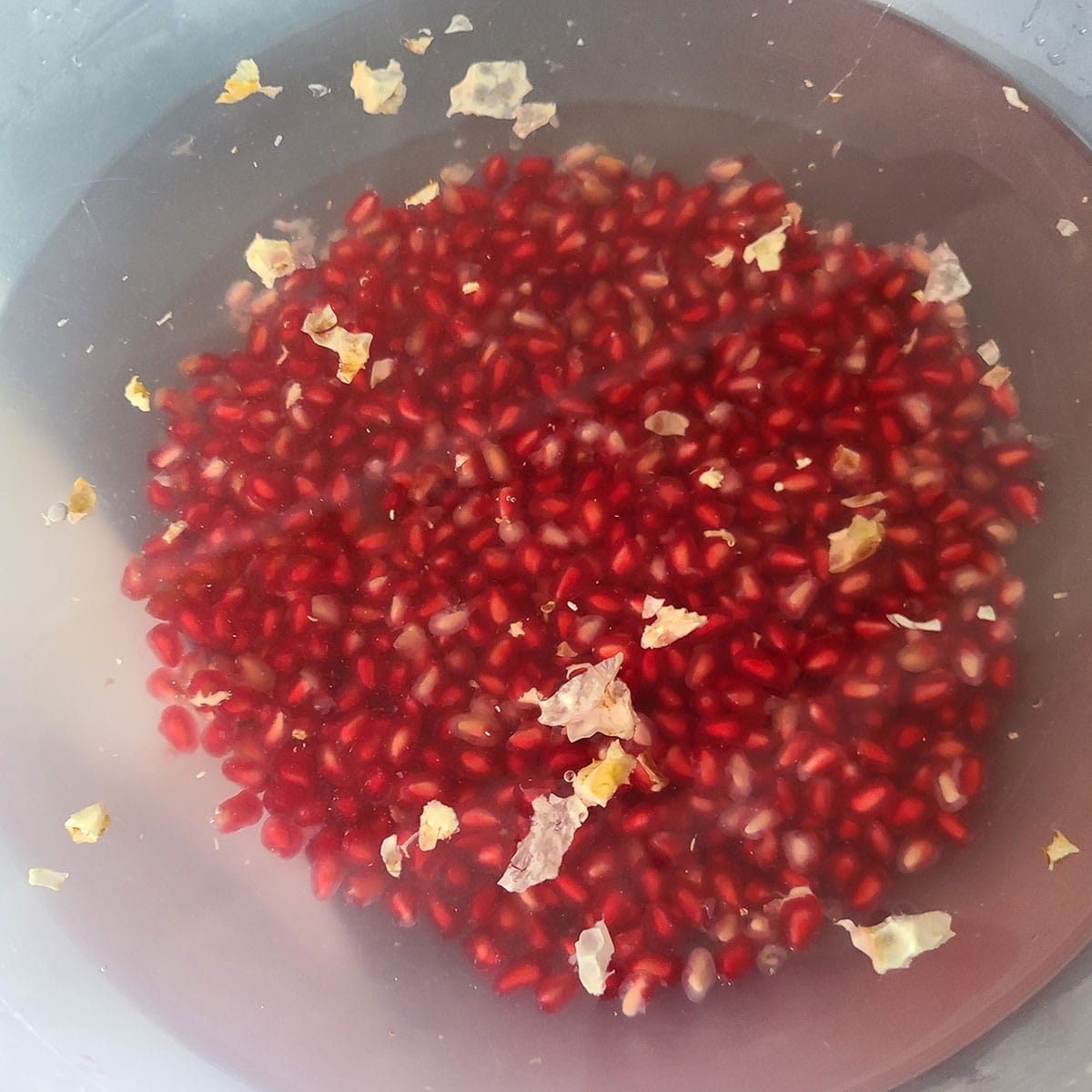
Carefully pour the water off the arils, taking the floating membrane bits with it.
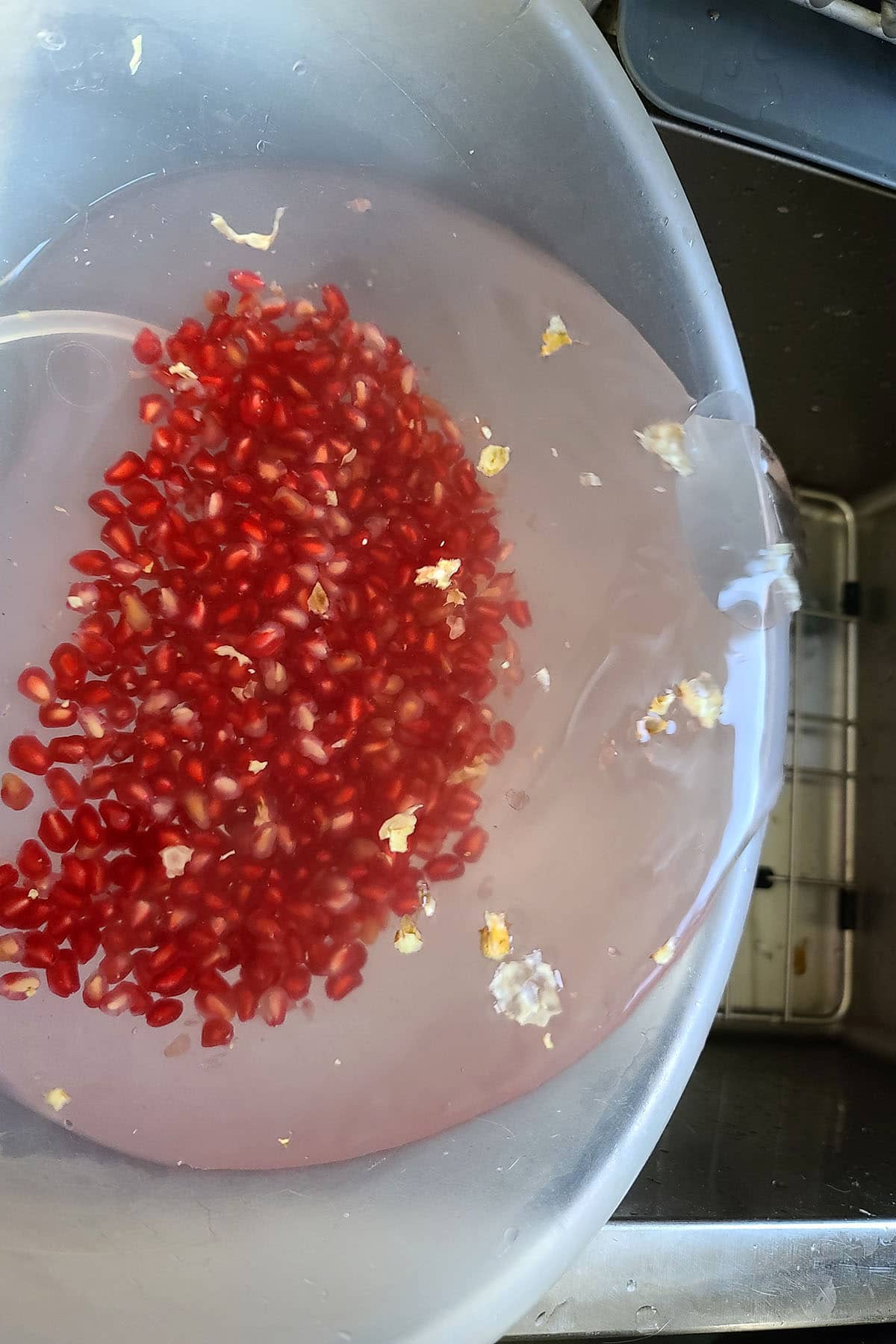
Serve it, store it, or use it in your favorite pomegranate recipes!

More Fall Eats
Looking for more cool weather, “autumn” type recipes to enjoy as the leaves change? I’ve got you!
Acorn Squash Tortellini with Nutmeg Cream Sauce
Hearty Corn and Black Bean Soup
Homemade Hard Apple Cider
How to Make Candy Apples
How to Make Pumpkin Mead
How to Roast Chestnuts
Maple Pumpkin Spice Bagels
Roasted Cauliflower Soup with Smoked Serrano Drizzle
Traditional Pumpkin Mousse
Wild Rice & Sausage Stuffed Peppers
Wild Rice Stuffed Chicken Breast
Share the Love!
Before you chow down, be sure to take some pics of your handiwork! If you post it to Bluesky, be sure to tag us - @CelebrationGen. We're also on Pinterest, so you can save all your favourite recipes to a board!
Also, be sure to subscribe to my free monthly email newsletter, so you never miss out on any of my nonsense. Well, the published nonsense, anyway!
Finally, if you love this recipe, please consider leaving a star rating and/or a comment below, and maybe even sharing this post on social media!
How to Cut and Serve Pomegranate
Equipment
- Cutting Board
- Paring Knife
Ingredients
- 1 pomegranate
- water
Instructions
- Wash the outside of the pomegranate.
- You’ll be handling it at the same time as the inside, so you will transfer anything on the outside, to the raw fruit you’ll be eating.
- Use a sharp knife to cut the pomegranate in half.
- Over a large bowl of water, use your hands to break one of the pomegranate halves into smaller pieces, along the membrane lines. (Pomegranates are made up of several “chambers” separated by a yellowy white pith type membrane.)
- Peel off the exposed pith pieces to expose clusters of pomegranate arils.
- One section at a time, gently remove the pomegranate arils, allowing them to collect in the bowl of water. I tend to lightly dislodge them with the thumb of the hand that’s holding the chunk of pomegranate.
- As you go, pick off and discard as much of the white membrane as possible.
- Once you have all the seeds separated from one section, move on to another - breaking it up, removing membrane, and dislodging arils into the bowl of water.
- Some bits of membrane will end up in the water - that’s OK for now.
- Once you’re done, discard the shell and loose membrane bits.
- Turning your attention to the bowl of water and arils, sort through the fruit to pick out any attached membrane.
- The membrane will float, unless it’s attached to fruit - so it’s easy to spot!
- Carefully pour the water off the arils, taking the floating membrane bits with it.
- Pick out any remaining membrane, and serve!






Leslie
THANK YOU.
I like the taste of pomegranate, but didn't know a good way to open them. THANK YOU!